
The list below is divided into African, Afro-Caribbean, and African American sections
| Wonderful paper by Sabelo Mhlambi (at Harvard’s Berkman Klein Center) on decolonizing AI with Africa’s fractal cycles of scaling relationality: https://bit.ly/3QkwS4o And yes he is wearing a fractal shirt in that video… | 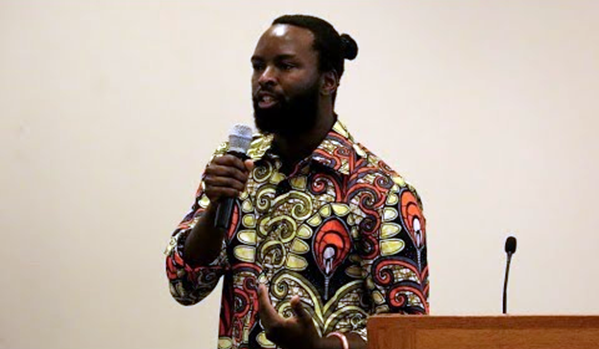 |
| Joshua Maumela, a computer scientist in South Africa, told me he was inspired by the passages in African Fractals about computational modeling of traditional forms of collaboration. His work started with the suspicion that the standard computer algorithms for agent-based optimization are reflecting Western notions of “self-interest”. So he created an algorithm, based on traditional collaboration patterns (Ulimisana), which has better performance than the “agent self-interest” approach for some metrics. | IEEE Access Received August 25, 2020 Digital Object Identifier 10.1109/ACCESS.2020.3026821 Introducing Ulimisana Optimization Algorithm Based on Ubuntu Philosophy TSHIFHIWA MAUMELA1, FULUFHELO NELWAMONDO1,2, (Senior Member, IEEE), AND TSHILIDZI MARWALA1, (Senior Member, IEEE)ˆ |
| Aikin Karr’s spectacular dissertation on African fractals https://researchgate.net/publication/349645124_Back_To_The_Fractal_Lessons_Learned_from_Pre-colonial_African_Settlements For more see his instagram https://www.instagram.com/aikinkarr/ And his publications here: https://issuu.com/aikinkarr | 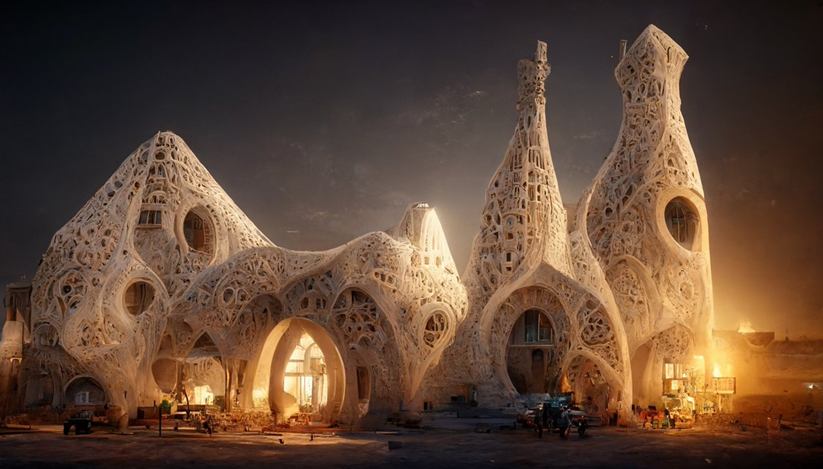 |
| Ismaël Diadié Haïdara shows that fractal structure is not only visual in African designs, it also structures traditional African song lyrics and other communication forms. | Tebræ, African Art and Fractal Geometry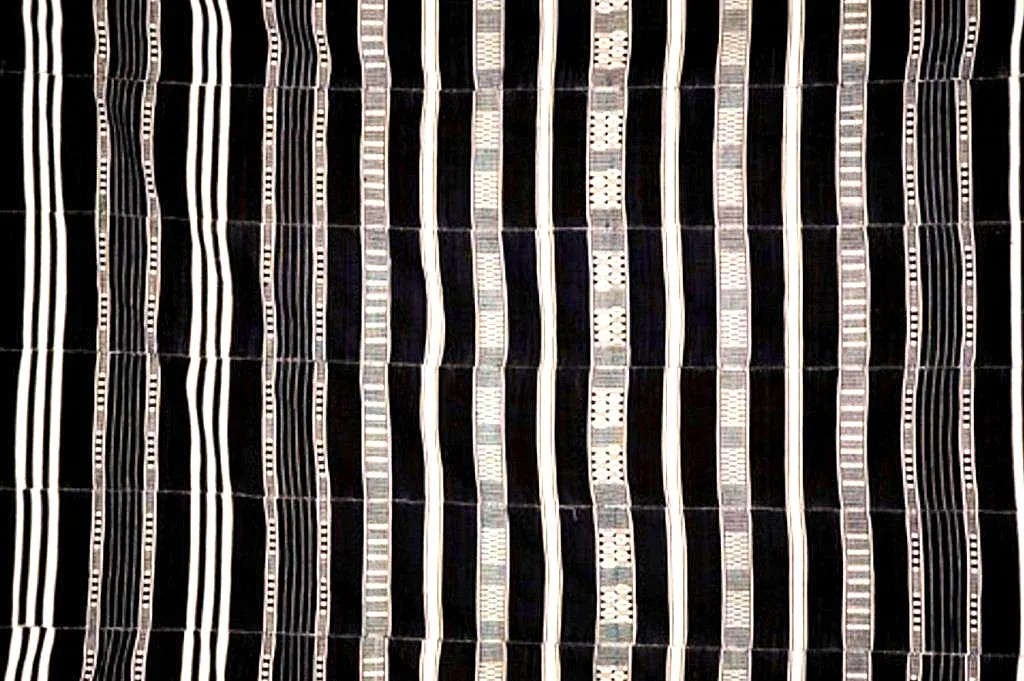 |
| Matsipa_Mpho: “The intimate, networked, and fractal nature of black hair braiding spaces disrupts the rigid colonial spatial orders of the city… while also disrupting the colonizing and gendered structure of urban studies” https://www.researchgate.net/publication/319106170_Woza_Sweetheart_On_braiding_epistemologies_on_Bree_Street | 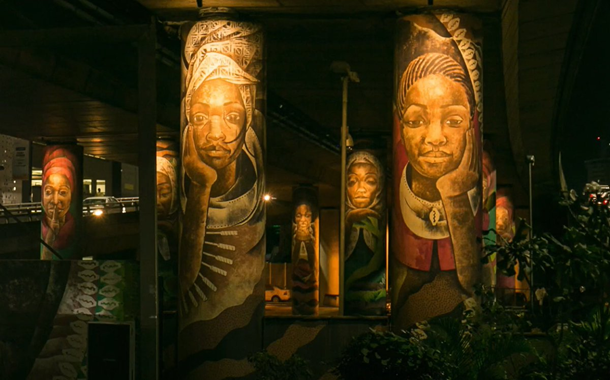 |
| Tokunbo Laotan-Brown’s dissertation (below) signifies scaling with the Greek term “oikos” which is the root “eco” in economics and ecology, and originally meant “household management” as well. Laotan-Brown, T. (2019). Has Evolution been Interrupted in the African Oikos? Merging the self-organization activity approach using african fractal spatial patterns with tangible and intangible values: yoruba cities as a case study. Doctoral dissertation, University of Nova Gorica. | African-Yoruba Oikos and Cosmic Haptic philosophy as an artefact: Circularity and fractal geometric analysis. Merging the Self-Organizational Activity Approach Using African Fractal Spatial Patterns with Tangible and Intangible Values |
| Power: An African Fractal Theory of Chaos, Crime, Violence and Healing by Biko Agozino, professor of sociology, university of the west indies. He is originally from Nigeria. | https://citeseerx.ist.psu.edu/viewdoc/download?doi=10.1.1.536.2620&rep=rep1&type=pdf |
| Chukwuemeka V. Chukwuemeka (Sugarman Practitioner in Residence, Princeton) shows fractal scaling in Nigeria’s urban markets in “Critique of Permanence and Linearities in Urban Africa. Perspectives From Onitsha Markets in Nigeria” | 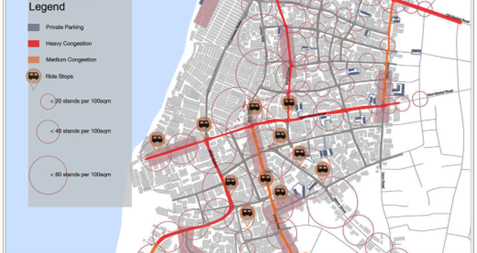 |
| Cave_bureau Nairobi based bureau of architects and researchers, with award-winning fractal design studies in nature, architecture and emergent urbanism: https://cave.co.ke/void | 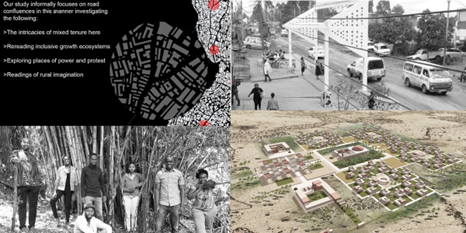 |
| Zimbabwe artist Tendai Mupita studied fractal geometry and Shona traditional design to create art that would remind us how “all living beings have the same importance and are connected by a molecular and germinative energy that flows among them” https://t.co/Poy1pUNHH9 | 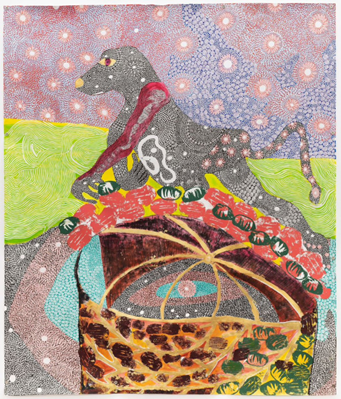 |
| Abdul Karim Bangura’s work includes fractals in literature and other conceptual workshttps://www.encyclopedia.com/arts/educational-magazines/bangura-abdul-karim-1953 Fractal Complexity in Mwalimu Chinua Achebe’s Things Fall Apart: A Mathematical Exploration | 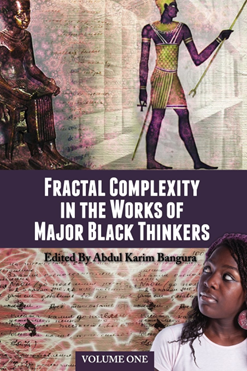 |
| Michael Nyarkoh’s dissertation, “Transformations in Sirigu Wall Painting and Fractal Art Simulations”http://ir.knust.edu.gh/handle/123456789/5931 Love the way he shows how small decorative elements within the fish, and the shape of the fish itself, echo each other as part of the same fractal. | 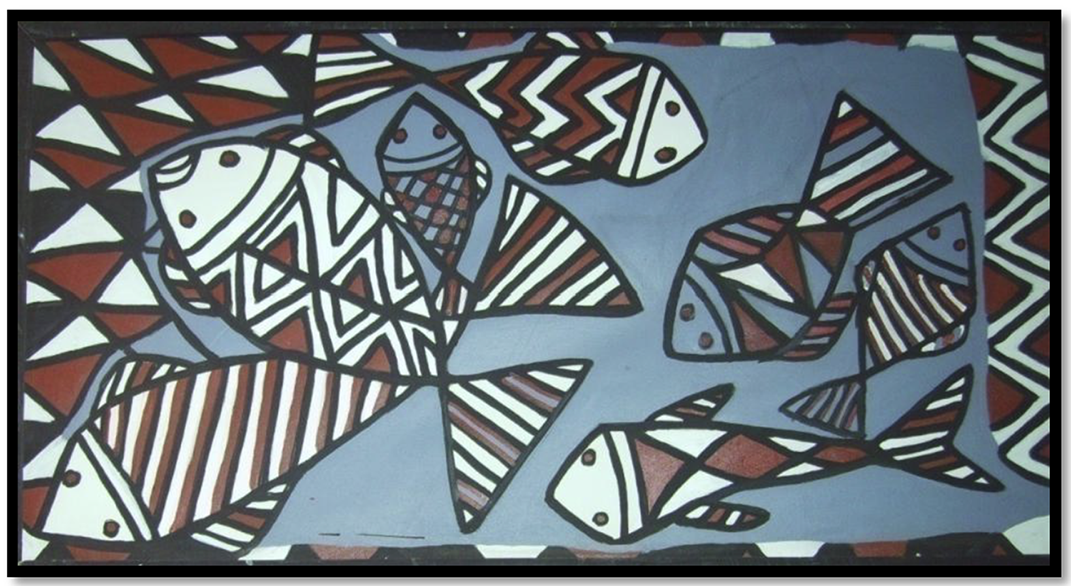 |
| Conceptual headpieces by Tosin Oshinowo and Chrissa Amuah rethink the face mask with fractal etched surfaces https://iconeye.com/?p=44925 | 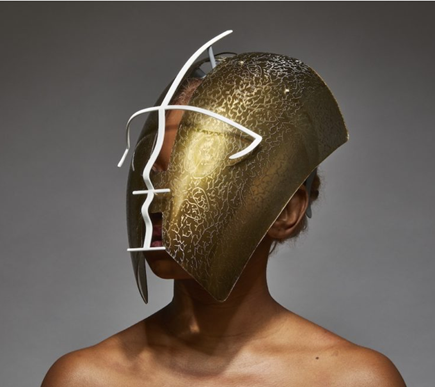 |
| Lina Iris Viktor brings some style to fractal geometry. When she says “golden rectangle” she really means it. |  |
| Nsobila Asamannaba’s architecture thesis project: a fractal layout for tourism development in Ghana’s crocodile sanctuary. Why triangles? Ever see the head of a crocodile; the diamond shape of its scales; the sharp profile of its tooth? | 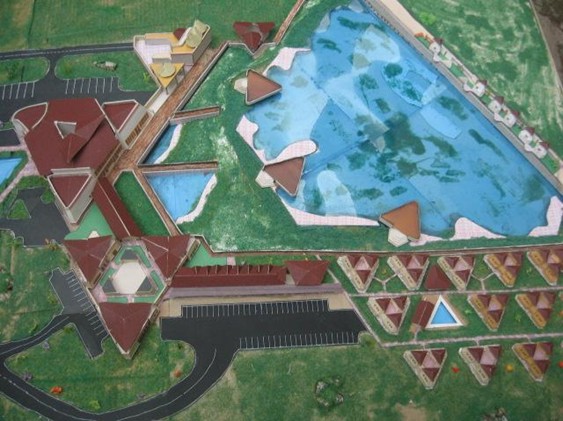 |
| FRACTAL — Future Resilience for African CiTies And Lands https://www.fractal.org.za FRACTAL is a trans-disciplinary group of researchers from partner organizations around the world. | Not just an acronym; they use a “bottom-up, adaptive decision-support” approach, the Decision-Scaling framework, so that there is a kind of fractal governance to maximize voices at the local scale and minimize imposition of authority from above. |
| “African fractals as a tool for transformative education in Africa” by Peter Bembir | Contemporary Journal of African Studies 2019; 6 (1): 1-26https://dx.doi.org/10.4314/contjas.v6i1.1 |
| “Mathematics Embedded in Akan Weaving Patterns” by Kwame Adapa (includes the Fibonacci sequence example cited by Bennett below) | https://www.theakan.com/mathematics-embedded-in-akan-weaving-patterns/ |
| R.A. Oppong, A.B. Marful, E.S. Asare, Improving urban visibility through fractal analysis of street edges: The case of John Evans Atta Mills High Street in Accra, Ghana, Frontiers of Architectural Research, Volume 6, Issue 2, 2017, Pages 248-260 | https://www.sciencedirect.com/science/article/pii/S2095263517300225 |
| “Leila Bencharnia is a sound artist, acousmatic performer and musician born in Morocco and based in Milan/Berlin. Child of a traditional Moroccan musician, their dialogue with sound began in the village near the Atlas Mountains where they spent their childhood. Bencharnia’s sound work comprises analog materials, including tapes, vinyl and synthesizers. Acknowledging radical listening as a means of transmitting knowledge, their practice aims to actively contribute to the decolonization of listening as a method for addressing social and political complexities. Currently, Bencharnia’s research is centered on the language of indigenous Tamazight textiles, the mathematics of African fractals, and their interrelation with sound. | https://www.florilegio.org/pochemuchka/leila-bencharnia/ |
Afro-Caribbean Scholars in Fractal Inquiry
| Sonja Dumas This paper presents my theories around the role and signification of wide skirts used in traditional African Caribbean dance performance as experienced and presented in Trinidad and Tobago. Using the concepts of generational memory, female agency, creolization, and recursion, I show how the traditional African Caribbean dance skirt continues to be a factor in the construction of generational empowerment and freedom-making for women when they perform these diasporic dances. | Memory, Female Agency, and Geometry in African Caribbean Skirt Dances in Trinidad and Tobago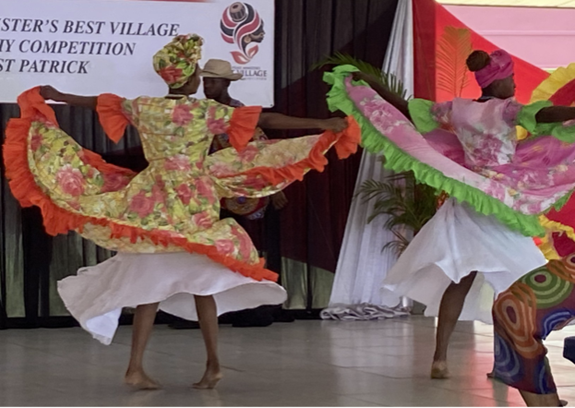 |
| Erna Brodber on African Fractal Designs: The author of Nothing’s Mat (2014), which used fractal themes in her novel, has also lectured on the concept as an African heritage design This Kuba cloth she selected for her Yale lecture is deceptively simple. The positive-space diamond at center can be created by flipping the negative space triangles at either side. So, like Escher, she combines reflection symmetry with something that is simply not part of traditional European math. See geometric “mutuality” at https://csdt.org/culture/adinkra/geometry.html | https://artgallery.yale.edu/calendar/events/gallery-talk-windham-campbell-prizewinner-erna-brodber-african-fractal-designs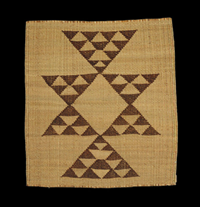 |
| Marie Sairsingh (University of the Bahamas) on fractal themes in Erna Brodber (see above) | Reading Diaspora through Fractal Theory |
| CARIBE FRACTAL / FRACTAL CARIBBEAN is an ongoing project by artist José Arturo Ballester Panelli (Ballesta 9), an Afro-Caribbean artist based in Puerto Rico, U.S. Virgin Islands. Ballester’s work explores the connections between photography, Afro-Caribbean aesthetics, history and the racial, social and ecological system in the Caribbean and its diasporas. “https://rcah.msu.edu/uniquely-rcah/lookout/Ballester-2020-Exhibit.html | 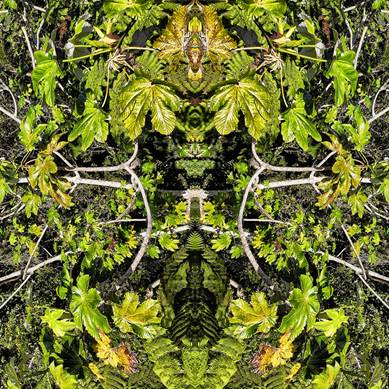 |
| Professor Audrey Bennett (born in the Bahamas, now at UM), tracing the fibonacci iterations from Africa to Europe | https://www.fastcompany.com/90616802/the-surprising-history-behind-some-of-designs-most-famous-principlesa |
| Antonio Benítez-Rojo: born in Havana, he credits his work on fractal metaphors in part to the African domestic worker he grew up with. This is a fraught relationship, to say the least–Cuba was the last in the global north to end slavery, in 1885–and being Cuban is not automatically the same as having African heritage. But it is important to note that his main work, The Repeating Island: The Caribbean and the Postmodern Perspective (Duke University Press, 1992) predates African Fractals (1999). | https://bombmagazine.org/articles/antonio-ben%C3%ADtez-rojo/ |
| Jamaican-American visual artist Renee Cox: “…My new body of work, ‘Sacred Geometry,’ consists of digitally manipulated black & white portraits that display self-similar patterns. They are executed with precision, creating sculptural kaleidoscopes of the human body while exploring the power of symbols as elements of collective imagination. The inspiration for this new work comes from fractals, a mathematical concept centuries old and used by many ancient African cultures.” | https://www.huffpost.com/entry/renee-cox_n_5669437 (NSFW)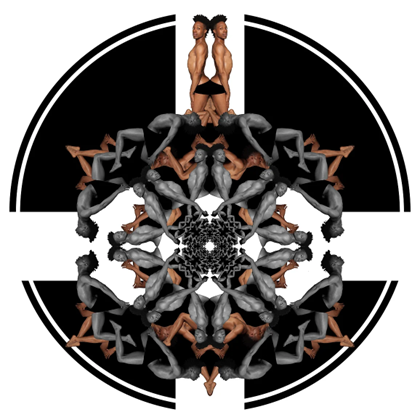 |
African American scholars in fractal inquiry
| Felecia Davis: “These started out as flat textiles using what we call African fractals… I then suggested that these “roses” could be popped up… with a bio-based resin to make an architectural structure”. https://psu.edu/news/arts-and-architecture/story/architecture-labs-computational-textiles-work-featured-upcoming | 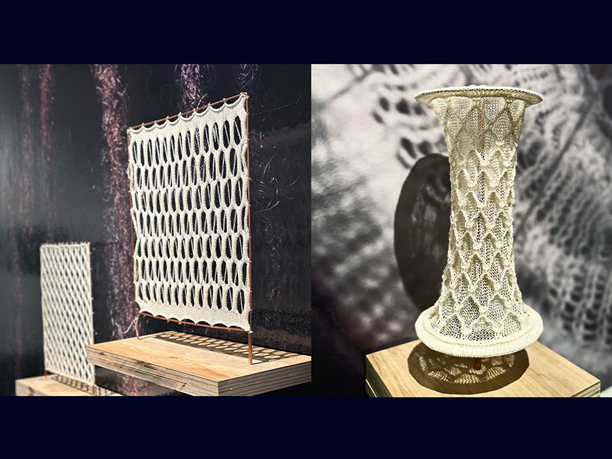 |
| https://www.nytimes.com/2022/02/24/arts/rashaad-newsome-assembly-exhibit.html “ Rashaad Newsome’s Assembly is an immersive multimedia exploration of … fractals, twerking, and abstract shapes seemingly coming to life.” (Note the cornrows in that image are a mashup between https://csdt.org/culture/cornrowcurves/index.html and https://csdt.org/culture/beadloom/index.html). | 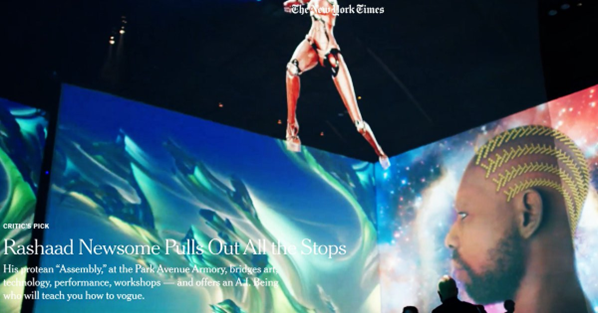 |
| Internationally acclaimed artist Steve R. Allen which is currently in the Jack Sinclair Gallery at the ArtsXchange in East Point. The exhibition titled: “Ancestral Origins: The Fractal Vision of Steve. R. Allen ” runs until March 31. Tamara Holmes Brothers, PhD writes, “The ancient wisdom of fractals derives from Africa as it was a commonly used technology by people and civilizations throughout history. The knowledge and understanding of fractals and Afrofuturism provide pathways that unlock the doors to successfully administering his designs. Allen’s vision exists in combining history and fantasy to explore African American experiences aimed to connect those from the Black diaspora with their historically excluded African ancestry.” https://theatlantavoice.com/steve-r-allen-afrofuturism-art/ | 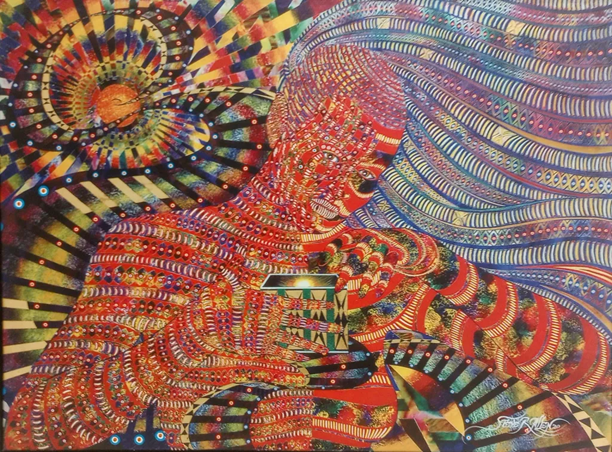 |
| Latoya Nelson Kamdang, AIASenior associate and director of New York operations, Moody Nolan, New York Fractal rain catchment design recalling both African heritage and biomimicry, in her presentation from FESTAC 2010 here | 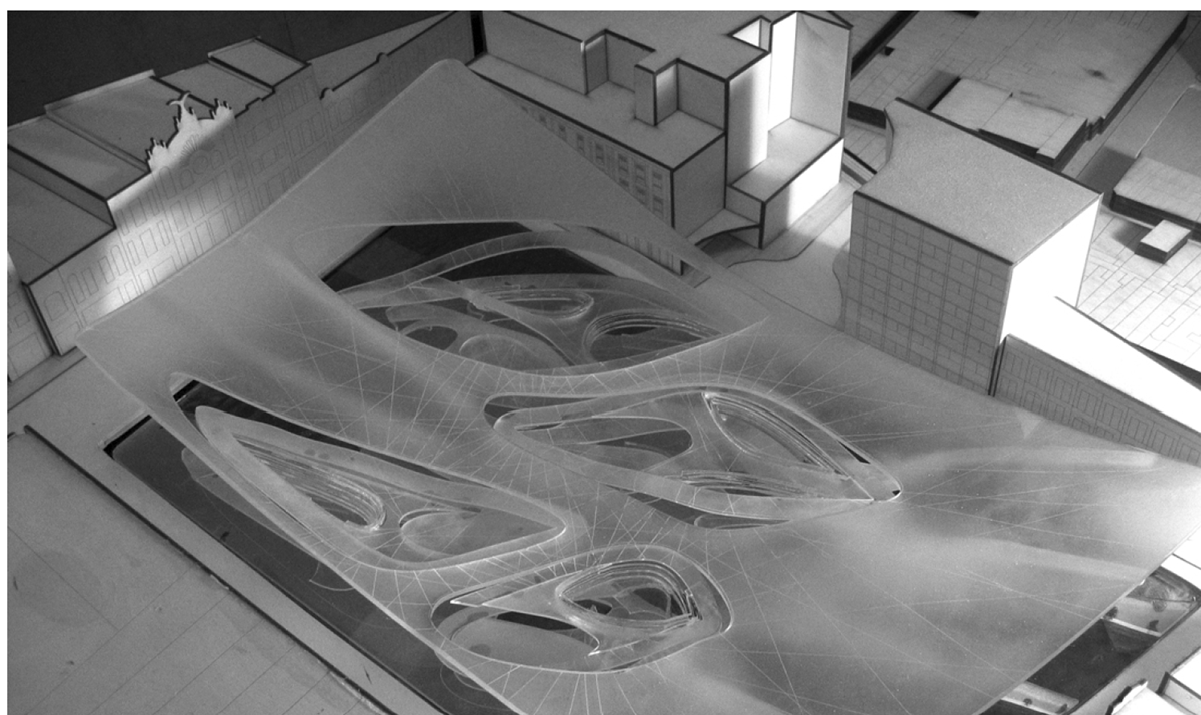 |
| Fractal Dance in Reggie Wilson’s Brooklyn performance: https://www.nytimes.com/2013/12/06/arts/dance/moses-es-comes-to-brooklyn-academy-of-music.html | 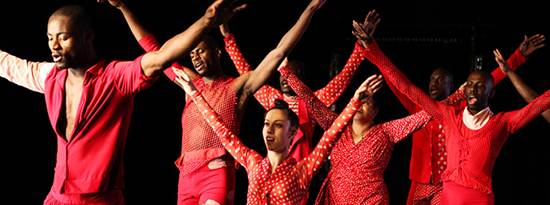 |
| Nettrice Gaskins https://nettricegaskins.medium.com/afrofuturist-software-from-conception-to-manifestation-d05389d0874 | 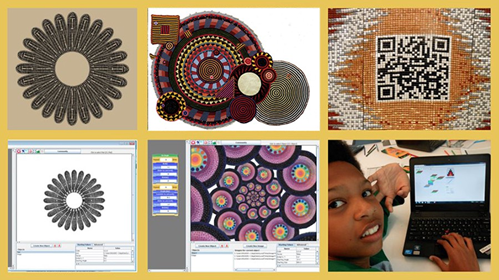 |
| adrienne maree brown is an activist, poet, scholar and theorist of emergence. Currently the writer-in-residence at the Emergent Strategy Ideation Institute. Excerpt on fractals from her book “Emergent Strategy” is below: https://earthlingopinion.wordpress.com/2019/03/01/fractals-the-relationship-between-small-and-large/ | 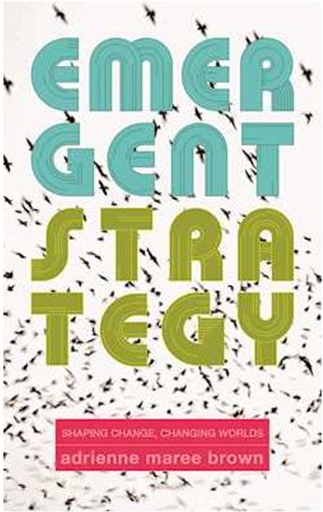 |
| Rico Gatson http://ricogatson.com/african-fractals/Ronald Feldman Fine Arts, New York, NYMarch 25 – April 22, 2006 Press Release:“Rico Gatson will exhibit paintings, sculpture, and videos that continue to investigate complex issues relating to identity and race. Based loosely on the notions of fractal geometry and indigenous design, Gatson links the African Diaspora and the intractability of a political/cultural matrix persistent throughout American history.” | 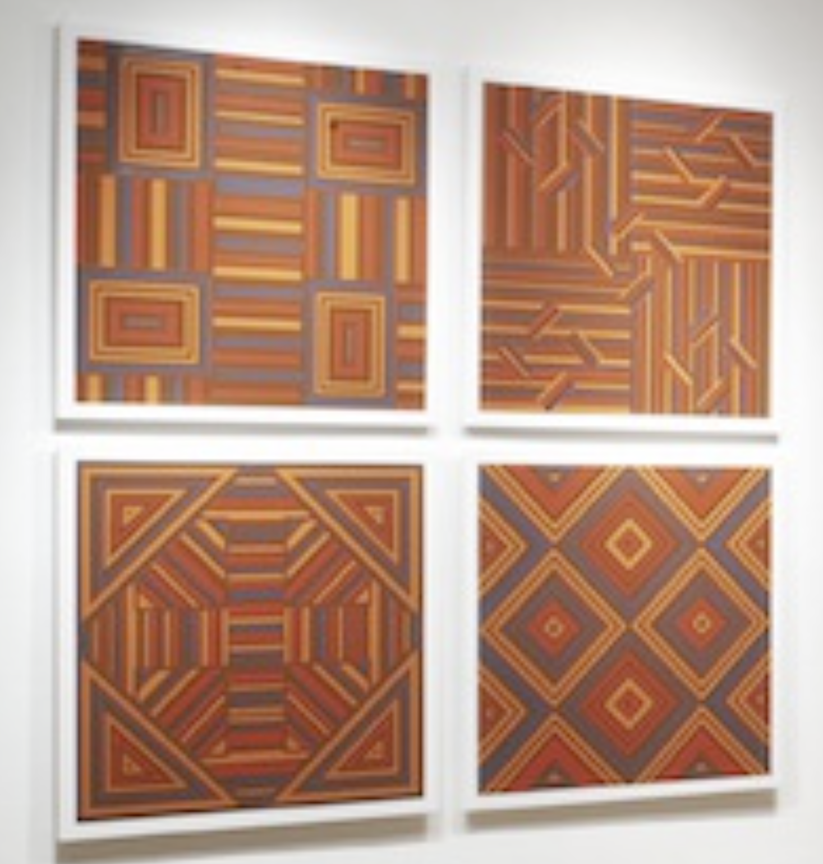 |
| Artist Char Jeré describes her work as “Afro-Fractalism”: “If Afro-Futurism involves imagining a speculative future through a Black lens, “Afro-Fractalism” is about rejecting the idea of linear time entirely… a way of defiling a linear, colonial, capitalist temporality. It makes the future less of a destination and more of an ongoing rehearsal or ritual. The future and the past are happening constantly and simultaneously. For me, Black futures take the shape of a fractal.” https://www.culturedmag.com/article/2025/01/03/char-jere-artist-andrew-kreps-show/ | 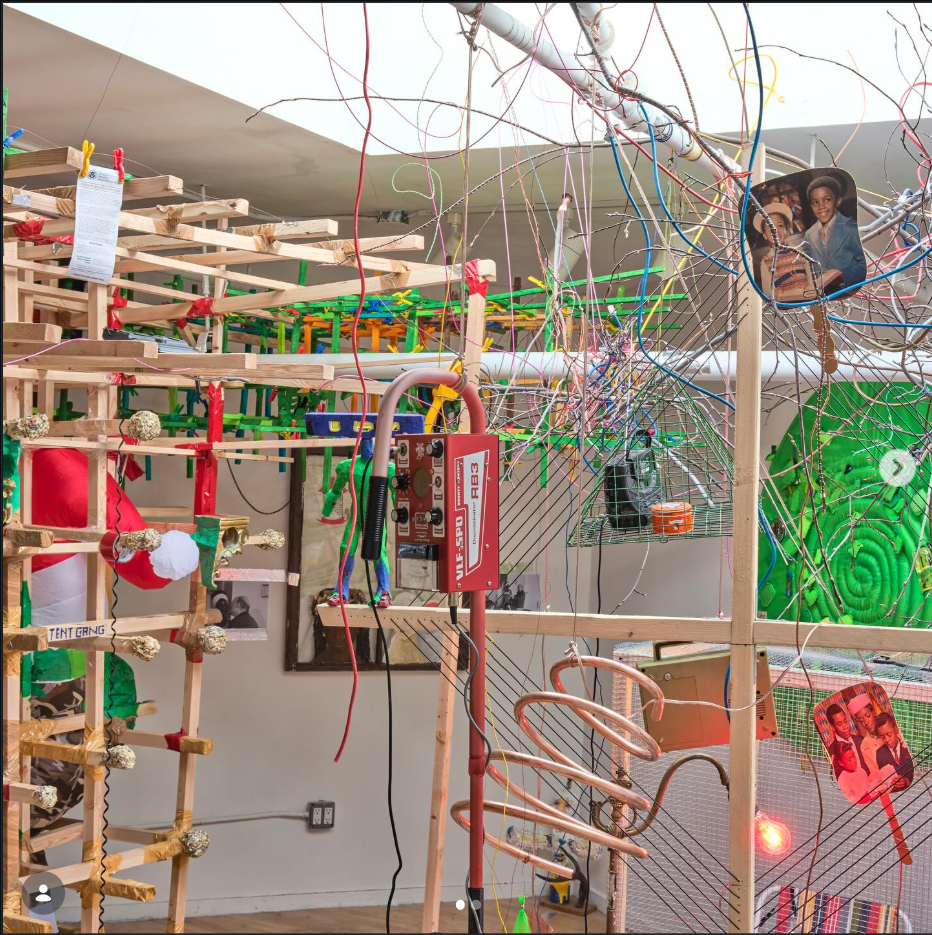 |