One problem with apps like ChatGPT is that they are not specifically designed for the needs of grassroots economies. If you want to empower the unalienated labor of independent artisans, it helps to co-design the AI model with them. Another problem is that no matter how well customized the AI model, it isn’t owned by those artisans. With UPCY we have solved both problems: it performs better than DALL-E for their image needs, and it is owned by the grassroots collective, not a big corporation.
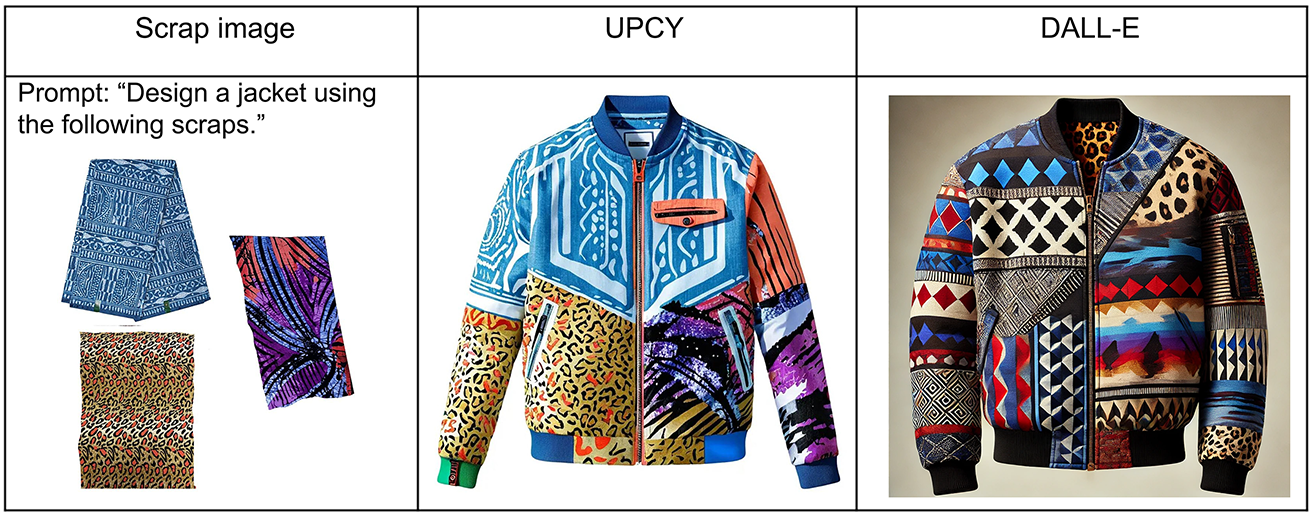
Figure 1 shows how the prompt “design a jacket with these textile scraps” was interpreted. At right, you can see that DALL-E creates a jacket which bears little resemblance to the textile patterns. That is because it re-interprets the patterns as text. It does have a word for “leopard print” so that scrap does show up in the jacket. But it has no word for the other two. UPCY, in contrast, uses an LLM for the jacket structure, and a separate “style transfer algorithm” for the textile patterns. A simple solution, but it helps to show how co-design of AI with artisans can create real innovation.